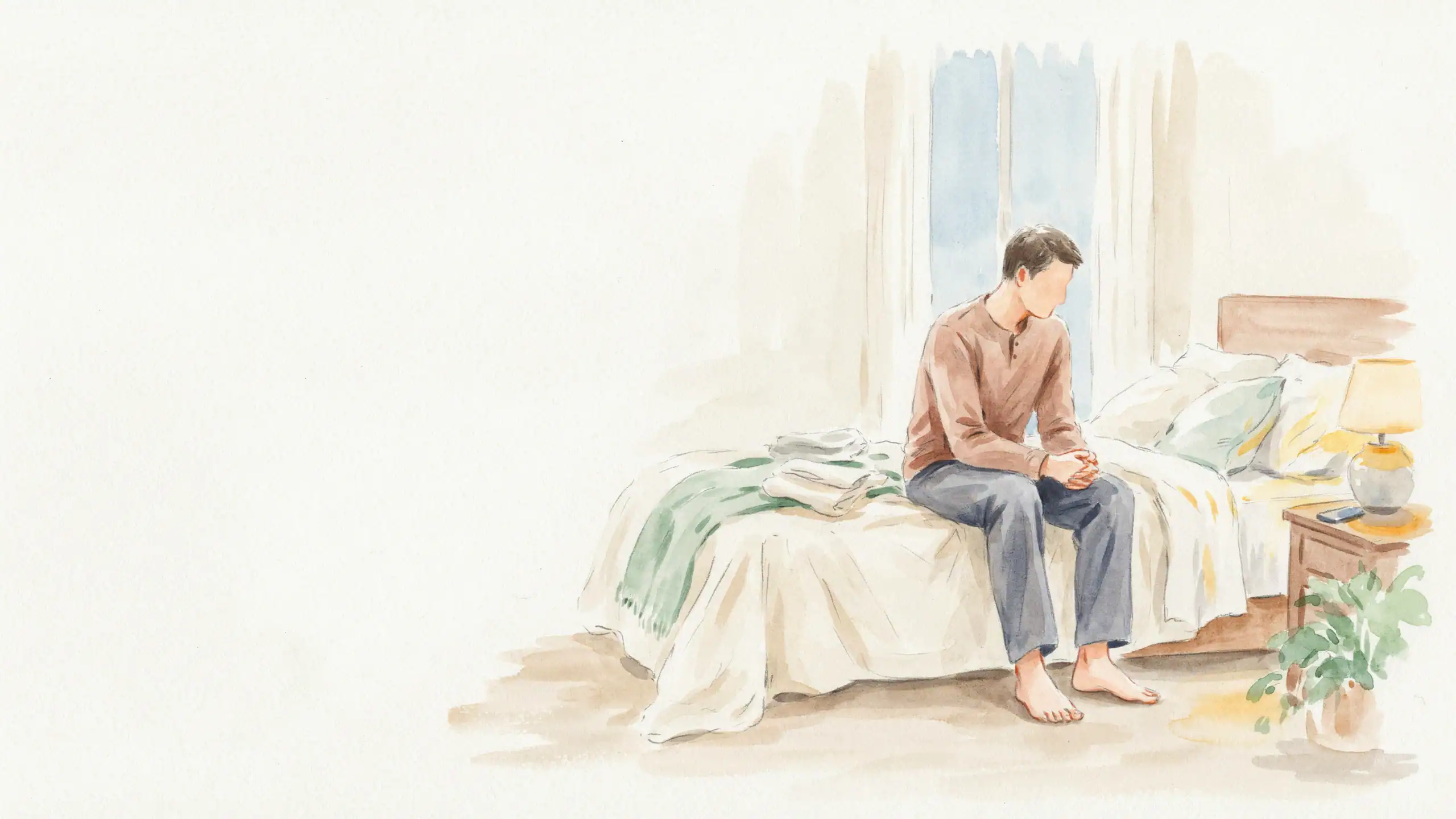
You Suspect Your Spouse Is Cheating: What to Do Before You Act
A suspicion isn’t proof. Here’s how to sort what you’ve noticed, raise it safely and protect your options.
Last reviewed: October 27, 2026 by Sarah Bates, Law Clerk, AP.fm, CDS
If you suspect your spouse is cheating, the most protective thing you can do this week is slow down. People search for the signs your wife is cheating (or your husband, or your partner) hoping for a checklist that settles it. No checklist can. A guarded phone, late nights or a sudden gym habit can point to an affair, and they can also point to stress, depression, a health worry or someone deciding to leave without saying so yet.
So start with what you’ve actually seen, not what you fear. Stay out of their phone and accounts. Decide what you want from a conversation before you have one, and get support for yourself while you don’t know. If you’re in Canada and wondering what happens legally, adultery is one way to show a marriage has broken down, but it generally doesn’t change spousal support or, in Ontario, how property is divided.
A sign
A question to ask, not proof
Snooping
Can create legal and trust problems
Adultery
One way to show marriage breakdown
Support
Misconduct isn’t counted under the Divorce Act
Common signs your wife or husband is cheating
The search term people use is usually about a wife, but nothing on this list has anything to do with gender. These are the changes that ranking guides, counsellors and family lawyers mention most, in plain terms:
- The phone becomes off limits. New passwords, the screen turned face down, calls taken in another room, text messages deleted, notification previews switched off, social media privacy settings changed.
- Time you can’t account for. Working late more often, new business trips, errands that take hours, periods when they’re unreachable.
- A changed routine. A new schedule, new hobbies or classes you aren’t invited to, a new group of friends you never meet.
- Emotional distance. A partner who seems distant: less conversation, less interest in your day, a sense that you’re living like roommates.
- Changes in intimacy. Usually less sex and affection, though some people show more interest or want to try new things.
- More attention to appearance. New clothes, a new look, a sudden focus on the gym or grooming.
- Money that doesn’t add up. Unexplained cash withdrawals, a new credit card or bank account, charges they won’t discuss.
- Defensiveness and blame. They get defensive or angry at simple questions, picking fights, constant criticism, or accusing you of cheating.
- Stories that shift. Details that don’t match from one telling to the next. Inconsistency can mean lying, or just a stressed, distracted person.
Why no single sign is proof
Every item on that list has an innocent explanation, and most people who go through a rough patch show several of them at once. Someone who’s depressed often withdraws and loses interest in sex. Someone under pressure at work comes home late and guards a work phone. Someone thinking about separating may pull away without anyone else involved.
Your gut feeling, or instinct, counts too. It tells you something has changed in the relationship. It can’t tell you what. Jumping to conclusions, in either direction, is how people end up acting on a guess. That’s the reason for the next step.
Separate what you saw from what you fear
When a suspicion takes hold, it can feel like you have to act tonight: check the phone, demand the truth, pack a bag. Chapter 4 of my book, Finding Your Way Through Separation, is about making room for a feeling without letting it make the decision. The idea that helps most here is to write the feeling and the urge to act down separately, so you can look at them.
Here’s a short exercise, adapted from that chapter. Do it on paper or in a private note on a device only you use:
- Write down what you saw. Only things you noticed yourself, with rough dates: “Home after 10 on three Thursdays in September.” Leave out what a friend guessed or what you read into it.
- List the other explanations. Next to each item, write at least one reason that has nothing to do with an affair. If you can’t think of one, ask someone level-headed.
- Name the feeling. Hurt, afraid, humiliated, angry, numb. Most people feel several at once, and all of them make sense.
- Name the urge. What do you want to do right now? Check their messages, confront them at dinner, tell your family, move out? Write it down.
- Test the urge against next month. Ask whether that action protects you a month from now or only promises relief for the next hour.
- Choose one step for this week. Book a therapist, call a friend, plan a conversation, or simply keep watching and writing for two more weeks.
This pause doesn’t make the feeling go away. It gives you enough room to think, and it turns a cloud of worry into a few facts you could say out loud without exaggerating. If you find that the list is shorter than the fear, that tells you something too.
Leave their phone and accounts alone
The urge to go looking for evidence is strong, but reading their messages, logging into their accounts, tracking their location or installing an app can cross legal lines in Canada and usually makes things worse, so read where checking up becomes cyberspying before you try any of it.
How to raise it with your spouse
At some point most people decide to say something. The conversation goes better when you’ve decided what it’s for. As I write in my book, Finding Your Way Through Separation:
Before a conversation, identify the result you need.
Sarah A. Bates, Finding Your Way Through Separation, Chapter 9
Do you want to understand what’s been going on? Ask for more time together? Tell them you’re worried about the marriage? Each of those is a reasonable goal. “Get them to admit it” is the one that most often goes wrong, because you can’t control what another person says, and a conversation built around a confession turns into an interrogation fast.
Choose the time and the words
- Pick a private time when neither of you is rushed, tired or drinking, and never in front of the children.
- Open with something you observed that can be checked: “You’ve been home after 10 most Thursdays since September, and you seemed upset when I asked.”
- Say how it affects you in one sentence: “I’ve been feeling shut out, and I’m worried about us.”
- Ask an open question and then stop talking: “Can you help me understand what’s going on?”
- Expect any reaction: denial, anger, tears, relief, or a counter-accusation. You don’t have to settle anything in one sitting.
In Chapter 9 of the book I make a point that fits this moment closely:
You may want an apology, reassurance or recognition. Those wishes are understandable.
Sarah A. Bates, Finding Your Way Through Separation, Chapter 9
What you can’t do is make the conversation depend on getting them. If your spouse denies an affair, you may not believe them, and you don’t have to. You can still say what you need: more honesty, a counsellor, time to think. You can come back to it.
Here’s a composite to show what this can look like (it isn’t a real client). Dev has been sitting in the car outside the house for twenty minutes with a few lines typed into a private note. Jordan’s phone now lives face down, and Thursday nights have become late nights. Inside, after the kids are asleep, Dev starts: “You’ve been getting home after 10 most Thursdays since September. I’d like to understand what’s happening.” Jordan’s answer comes quickly: “So you’re keeping track of me now?” Dev feels the pull to list every suspicious moment from the last six months, and doesn’t. “I’m not trying to catch you. I’m worried about us.” Jordan says work has been brutal and gets up to do the dishes. Dev doesn’t know if that’s the whole story. They agree to talk again on Sunday, and Dev books a session with a counsellor for himself either way.
Nothing got solved that night. Dev did say what he’d noticed without a fight, and he kept his options open.
When raising it isn’t safe
If your spouse has threatened you, controls your money or movements, or reacts to disagreement with intimidation, don’t plan a confrontation. If you are in immediate danger, contact local emergency services. If there are threats, coercive control, violence, urgent child-safety concerns or a mental-health crisis, seek prompt local professional or emergency support. A divorce coach can help you organize questions, but coaching isn’t an emergency response or a safety plan.
Not sure what to say, or whether to say anything yet?
We can sort what you’ve noticed, plan the conversation and work out what this week needs.
Getting support while you don’t know
Living with a suspicion is exhausting. Many people stop sleeping well, can’t focus at work and replay every conversation. Look after the basics first: sleep, food, getting outside. Then tell one trusted person, not everyone, because what you share now is hard to take back if the suspicion turns out to be wrong.
Different kinds of help do different jobs:
| Divorce coach | Therapist or counsellor | Family lawyer | |
|---|---|---|---|
| What it’s for | Sorting facts from fear and planning your next step | Hurt, anxiety, grief and jealousy | Your legal rights if you separate |
| Good time to call | When you don’t know what to do first | When the feelings are taking over your days | When you’re seriously considering separation |
| What you’ll leave with | A short plan and questions to ask | Ways to cope and, in couples counselling, a place to talk | Advice for your province and your facts |
| What it doesn’t do | Give legal advice or therapy | Tell you your legal options | Help you repair the marriage |
If you both want to try to repair things, a couples counsellor is the right room for it. I’ve written more about marriage counselling before divorce and about how to tell whether your marriage is over. If the hardest part is the swing between hope and dread, my post on emotional divorce may help.
When someone brings a suspicion like this to coaching, the first thing we do is the exercise above: pull the observations apart from the fear. Then we decide together what you want to find out and who can help you find it. Here’s what a divorce coach does in more detail.

What adultery means legally in Canada
This part is for people who are starting to think past the conversation to separation. It’s general information, and the details of your situation are a question for a lawyer, not a divorce coach.
Canada’s Divorce Act has one ground for divorce: the marriage has broken down. You can show that in one of three ways: you’ve lived separate and apart for at least one year, your spouse committed adultery, or your spouse treated you with physical or mental cruelty that makes living together intolerable (section 8(2)). The Department of Justice Canada describes this as no-fault divorce, because no one has to prove fault to get divorced.
Adultery is just one route, and it has conditions. If your spouse disputes it, it has to be proved. And if a court finds you condoned it (forgave it and carried on with the marriage; the law calls this condonation) or helped bring it about, the law says the court must dismiss a divorce based on it, unless the public interest is better served by granting the divorce (section 11(1)(c)). Many people find the one-year separation route simpler. Your lawyer can tell you which fits.
Fault and money, property and parenting
- Spousal support. When a court makes a spousal support order under the Divorce Act, it must not consider any misconduct of a spouse in relation to the marriage (section 15.2(5)).
- Property in Ontario. The Government of Ontario says property acquired during a marriage must be split equally when a marriage ends, for any reason, with an unequal split only in very special situations. Other provinces have their own rules, so check yours.
- Parenting. Under the Divorce Act, a court deciding a child’s best interests doesn’t consider a person’s past conduct unless it’s relevant to their parenting (section 16(5)).
That can feel unfair when you’ve been hurt. It also means you don’t need to prove an affair to protect yourself financially, which takes some pressure off the urge to go searching for evidence or hire a private investigator.
If you’re considering separation: your first lawyer meeting
You don’t need certainty about an affair to get legal advice. Bring a short list of questions:
- What would separation mean for where the children and I live?
- What should I do, and avoid doing, with joint bank accounts right now?
- What financial documents should I start gathering?
- Does adultery make any difference in my province, and would it be worth relying on?
- What should I avoid saying or doing while we’re still under the same roof?
If you’re in Ontario, here’s how adultery fits Ontario’s grounds for divorce, explained by our sister site, Divorce the Smartway. If the affair is confirmed and you’re facing the next decisions, my post on divorcing a cheating spouse picks up from there.
You don’t have to sort it all out today.
If you’ve read this and still don’t know your next step, let’s talk it through. I’ll help you work out what needs attention this week and what can wait.
Questions about the signs of cheating
I suspect my wife is cheating but have no proof. What should I do?
Write down what you’ve seen, stay out of their phone, decide what you want to say and get support for yourself
A suspicion without proof is a hard place to be, whether it’s about a wife, a husband or a partner. Start with the exercise above: separate the things you saw from the fear. Then choose one step for this week, such as booking a counsellor or planning a calm conversation.
You don’t need proof to talk about how the relationship feels to you, and you don’t need proof to get legal advice if you’re thinking about separating.
Is it legal to check my spouse’s phone in Canada?
It can cross legal lines, depending on how you get into it and what you do with what you find
Logging into someone’s accounts without permission, installing tracking apps or recording conversations you’re not part of can raise criminal and privacy problems in Canada. It can also damage trust in a way that’s hard to repair, even if you find nothing.
Before you consider it, read where checking up becomes cyberspying and talk to a lawyer about your situation.
Does cheating affect divorce in Canada?
Adultery is one way to show marriage breakdown, but misconduct isn’t considered for spousal support under the Divorce Act
Under the Divorce Act, adultery is one of three ways to prove a marriage has broken down. The others are one year of separation and cruelty.
When a court orders spousal support under the Divorce Act, it must not consider either spouse’s misconduct in the marriage. In Ontario, property is divided equally for any reason, except in very special situations. Rules for property vary by province, so ask a lawyer where you live.
Should I hire a private investigator?
Talk to a lawyer first, because in most cases proof of an affair won’t change support or property
Some people hire an investigator because not knowing feels unbearable. Before you spend money on one, ask a lawyer whether the information would change anything for you legally. Often it won’t.
If what you need is the truth for your own peace of mind, a direct conversation, a counsellor or time to watch and write down what you notice may get you there at less cost.
What are the signs of an emotional affair?
Secrecy and emotional closeness with someone else, often without anything physical
An emotional affair usually looks like a friendship that’s kept hidden: long private conversations, a person your spouse mentions often or stops mentioning suddenly, and less emotional connection at home.
Couples draw the line in different places, so what counts as cheating is something to talk about together, ideally with a counsellor if the conversation keeps going badly.

Related Articles

Emotional Support and Guidance